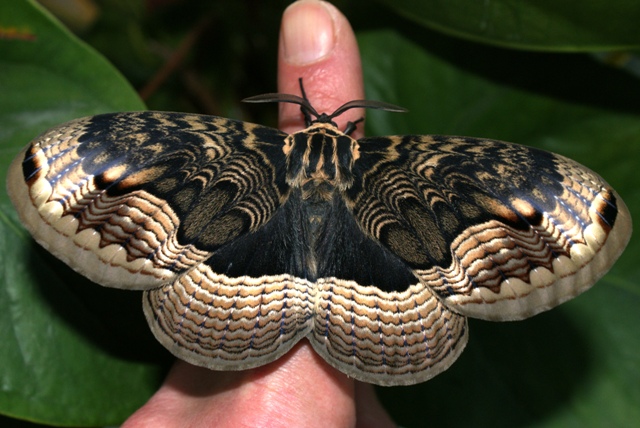
Kweekverslag Brahmaea certhia
Oorsprong: Jiangsu, China
Verspreidingsgebied: Van Korea / China tot in Indonesië
Klimaat: Subtropisch / tropisch
Voedselplanten: Ligustrum, Syringa, Fraxinus
Jaar: 2008
24 september
Ik heb op een advertentie van Johann Müller op Actias gereageerd, hij biedt Brahmaea certhia eitjes aan. Doordat er meerdere vrouwtjes in één kooi zaten en niet alle vrouwtjes bevrucht zijn, kan hij de eitjes niet verzenden. Hij wil eventueel wel rupsjes verzenden als de eitjes zijn uitgekomen.
16 oktober
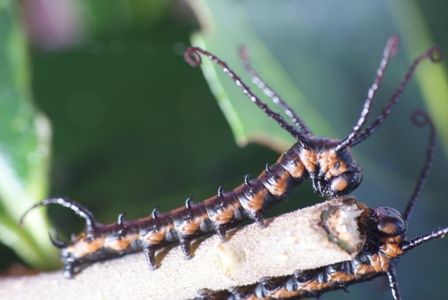
Er liggen 20 rupsjes op de deurmat, inclusief liguster takjes verpakt in een plastic zak met daar omheen een platte kartonnen doos. De rupsjes hebben de reis goed doorstaan en aan de grootte te zien, zitten ze net in L2. Omdat ze al redelijk van formaat zijn, gaan ze direct maar in een bak met een paar verse takken liguster op water, ze hebben prachtig uit gegroeide tuberkels.

26 oktober
Ondanks de lage temperatuur groeien de rupsjes groeien als kool, ze staan in de huiskamer bij een temperatuur die schommelt tussen de 17 en 21 °C in een transparante kunststof bak die aan één kant van gaas voorzien is voor ventilatie. De meeste rupsen zitten nu aan het einde van L3 en ik kan nog net even een klein exemplaar voor de lens krijgen, in dit stadium zijn ze echt prachtig.
1 november
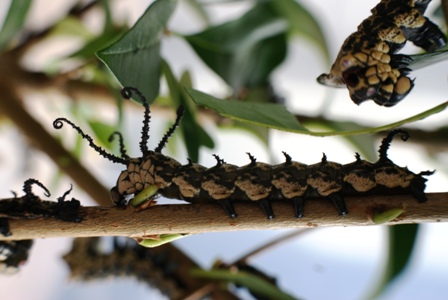
Nog geen enkele rups verloren en het groeien gaat maar door. Op de foto een rups aan het einde van L4 die zich klaar maakt voor zijn vervelling, dat is goed te zien aan het kleine kopschild. De verdikking direct achter het kleine kopje is zijn nieuwe kop die nu nog onder zijn oude huid verborgen zit. Links op de tak hangt nog een velletje van een broer of zus die (nog) niet de moeite heeft genomen om het op te eten. Rechts boven hangt een inmiddels verveld familielid. Om de groei nog wat extra aan te sporen, zet ik de rupsen bij een iets hogere temperatuur in mijn kweekkast, daar heerst een temperatuur van 20 tot 25 graden en krijgen ze 13 uur licht per dag.

2 november
Ook de laatste rups in nu van jasje verwisseld en alle rupsen zitten nu in het laatste stadium. Zoals normaal is bij Brahmaea rupsen, zijn alle uitsteeksels in het L5 stadium ineens verdwenen, de lange schijnpoten van de rups zijn nu goed te zien.
Rups in schrikhouding. Op deze foto zijn de rood/zwarte oogvlekken van de rups goed te zien, de rups neemt deze houding aan als ze gestoord wordt om belagers af te schrikken. De oogvlekken zijn vanaf L3 al aanwezig maar zijn dan vrij klein en vallen dan ook niet zo op door de uitstekende tuberkels. Boven en onder de oogvlekken zijn nog twee paar witte stompjes te zien op de plaats waar de tuberkels zaten.

4 november
Nu gaan ze pas echt veel eten en elke dag wordt er een flinke bos liguster ontbladerd. Omdat ik alle rupsen bij elkaar heb zitten gebruik ik de grootste bak die ik heb, toch kost behoorlijk wat moeite om er voor één dag voedsel in te krijgen.

8 november
Vandaag lopen de eerste rupsen druk heen in weer op de bodem van de bak, dat is een teken dat ze gestopt zijn met eten en opzoek gaan naar een plaats om te verpoppen. Zoals ik eigenlijk altijd doe met rupsen die zich ondergronds verpoppen, gaan ze elk in een eigen afgesloten kwarkbekertje bijna geheel gevuld met onbemeste, iets vochtige potgrond. De bakjes gaan weer terug in de kweekkast.

14 november
Heel voorzichtig kijk ik in het onderste bakje van de achterste stapel, die rups is het eerst de grond in gekropen. Omdat de rupsen zo snel groeien durf ik het na 6 dagen wel aan om even een kijkje te nemen, snel groeiende rupsen verpoppen meestal ook snel. In het eerste bakje kom ik een volledig uitgeharde pop tegen dus werk ik voorzichtig de rij met bakjes van onder naar boven en van achter naar voor af en kom tot de conclusie dat ze 4 dagen na het ondergronds gaan al verpoppen. Na de 14e pop kom ik er een tegen die nog duidelijk niet is uitgehard maar al wel een bruine kleur heeft, de witachtige waslaag is nog niet aanwezig. Poppen die echt vers zijn zien groen en zijn deels transparant. De resterende 5 bakjes zal ik nog maar een paar dagen laten staan. Een heel duidelijk kenmerk bij de poppen van Brahmaea certhia, zijn de twee knobbels net achter de kop aan de rugzijde van de pop, bij andere Brahmaea soorten zijn die vaak ook wel aanwezig maar niet in deze grootte.

6 december
Het is zo ver, de eerste vlinder is uitgekomen, het is een mannetje. De vlinders zijn behoorlijk schrikachtig en klappen dreigend met de vleugels als ze verstoord worden. Bij aanraken laten ze zich soms op de bodem vallen. Voorzichtig laat ik hem op mijn vinger lopen maar ik krijg het niet voor elkaar om hem op een plant te zetten, dan zo maar een paar foto’s schieten.
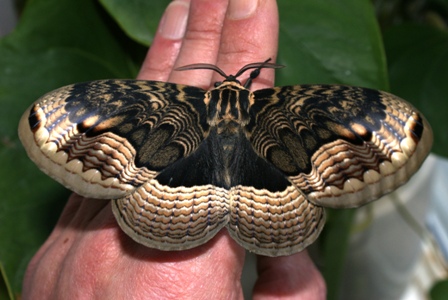
Het zijn echt prachtige beesten met een ingewikkeld lijnen patroon op de vleugels, aan het eind van de voorvleugels is het patroon lichter van kleur, het lijkt zo net of de punten van de vleugels een glans hebben.

7 december
Er zijn nog een aantal vlinders uit gekomen, er zitten ook twee vrouwtjes tussen en ’s avonds kan ik de eerste paring waarnemen.

9 december
Vandaag kan ik voorzichtig de eerste eitjes uit de kooi halen, tot zo ver is deze kweek gelukt. Nu is het afwachten hoe het met de rest van de vlinders gaat maar omdat ik in totaal 20 poppen heb en er in 2 dagen al 5 uit zijn gekomen, zal dat wel los lopen.
24 december
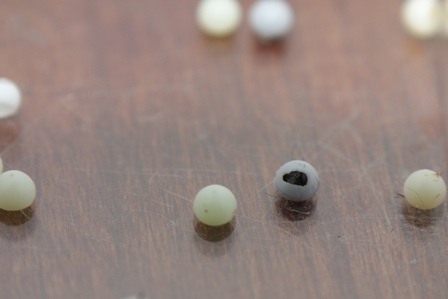
De eerste eitjes komen uit, ik ben nog net op tijd om het moment vast te leggen. Een paar dagen vóór het uitkomen worden de eitjes iets donkerder van kleur. Het merendeel van de eitjes die zijn gelegd heb ik via Actias weer kunnen verkopen, van elk vrouwtje heb ik een aantal eitjes achter gehouden voor eigen kweek. Door de met
nageslacht van zo veel mogelijk vrouwtjes verder te kweken, is de diversiteit in genen het grootst en zijn inteelt verschijnselen meestal met een aantal generaties te rekken.
Als de jonge rupsjes net uit het ei zijn gekropen zien ze wat bleek, het pigment heeft een uur of twee nodig om de rups zijn kleur te geven. De jonge rupsen spinnen draden waarmee ze zich onder natuurlijke omstandigheden vast zetten zodat ze niet kunnen vallen.

Ook deze kweek loopt weer voorspoedig en omdat ik zelf redelijk wat eitjes heb gehouden, moet ik ze in meerdere bakken onderbrengen, uiteindelijk eindig ik deze kweek met een kleine 60 poppen. In één bak heb ik wat uitval gehad, door te laat ontdekte condensvorming zijn er een aantal rupsen ziek en slap geworden. Doordat ik een deel van de rupsen in de huiskamer had staan, kregen deze weinig uren licht en lag de temperatuur van deze kweek tussen de 15 en 20 graden. Deze poppen kwamen na 8 weken nog niet uit, ik heb een vermoeden dat de rupsen door de korte dagen (in de laatste fase) als pop in diapauze gaan. Om die reden heb ik ze drie maanden in de koelkast bewaard en ze in het voorjaar in mijn tuinkast gelegd. Na een aantal maanden kwamen uit deze poppen 2 vlinders, de rest is niet meer uit gekomen. Bij controle een maand later, bleken de poppen teveel vocht verloren te hebben.